
Quick Answer: The global automotive suspension parts aftermarket is projected to reach USD 15.9 billion in 2026, growing at a CAGR of 11.5% from 2021. Japanese vehicle segments lead demand growth at +14.2% year-over-year, driven by aging Toyota and Honda fleets in Southeast Asia and the Middle East. For parts distributors, the most profitable opportunity in 2026 lies in OEM-quality Chinese-manufactured suspension components targeting the 80–150,000 km replacement cycle.
The automotive aftermarket suspension industry is entering a period of accelerated growth, driven primarily by three factors: aging global vehicle fleets, increasing car ownership among the middle class in emerging markets, and growing consumer demand for aftermarket products with prices comparable to original equipment manufacturer (OEM) quality. For parts distributors focusing on Japanese, Korean, and European models, 2026 will present structural opportunities, warranting strategic inventory adjustments and new product development. Simultaneously, the increasing market share of new energy vehicles globally presents both opportunities and new challenges for related industry players.
This report integrates data from MarketsandMarkets, Grand View Research, IHS Markit, and CBA Auto Parts’ own distribution network covering over 30 countries, aiming to provide practical market intelligence for suspension parts buyers and importers.
1. Market Size and Growth Trajectory

The global automotive suspension components market (including shock absorber mounts, engine mounts, control arms, ball joints, bushings, and related accessories) is projected to reach $14.3 billion in 2025 and is expected to reach $16 billion in 2026.
This growth trend reflects changing aftermarket purchasing behavior:
Increasing vehicle ownership: According to the S&P Global Mobility Report, the average age of vehicles in the United States will reach 13 years in 2025, up from 12 years in 2019. The average age of vehicles in Western Europe is also 13 years. Older vehicles require more frequent suspension maintenance, thus continuously stimulating demand in the overall chassis replacement components market. CBA AUTO PARTS happens to be a professional manufacturer specializing in chassis damping rubber components. They produce high-quality and competitive engine mounts, shock absorber top mounts, center bearings, bushings, and other parts, covering mainstream Japanese and Korean models, European models, and most American cars.
Rising New Car Prices: It is projected that by 2025, the average transaction price of a new car in the United States will exceed $48,000, prompting consumers to prioritize extending the lifespan of their existing vehicles rather than purchasing new ones.
Increasing Sales of New Energy Vehicles: While the adoption rate of electric vehicles continues to increase, the aftermarket for internal combustion engine vehicle suspensions will remain strong until at least 2030, as the 1.4 billion internal combustion engine vehicles currently on the global road will continue to age and require long-term maintenance and parts replacement.
2. Segment Analysis: Japanese, Korean, and European Vehicles

Japanese Vehicle Segment: The Dominant Aftermarket Opportunity
Toyota, Honda, and Nissan collectively account for approximately 38% of global vehicle parc in markets outside North America and Europe. The Toyota Corolla (global sales: 44 million cumulative), Hilux (22 million), and Camry (19 million) represent enormous installed base opportunities for suspension replacement parts.
Key market dynamics for Japanese vehicle suspension parts in 2026:
- Southeast Asia: Indonesia, Thailand, Vietnam, and the Philippines collectively have 28 million Toyota and Honda vehicles aged 6–15 years—the prime replacement window for strut mounts and engine mounts (typically required at 80,000–120,000 km).
- Middle East: Saudi Arabia and UAE imported 680,000 Toyota vehicles in 2024. The desert climate accelerates rubber component degradation, shortening replacement intervals by 20–30% compared to temperate climates.
- Sub-Saharan Africa: Toyota Hilux and Land Cruiser dominate the commercial vehicle segment. Road conditions in Nigeria, Kenya, and South Africa create 2–3× higher suspension wear rates than paved road environments.
For distributors, the Japanese segment offers the best balance of demand volume, part standardization (OEM part numbers are globally consistent), and margin potential. CBA Auto Parts carries suspension components for 15+ Toyota model lines with direct OEM cross-reference capability.
Korean Vehicle Segment: Fastest-Growing Aftermarket Niche
Hyundai and Kia’s combined global sales exceeded 7.3 million units in 2024, making them the third-largest automaker group by volume. More importantly for aftermarket distributors, Hyundai/Kia vehicles sold in emerging markets 7–10 years ago (2015–2018 peak) are now entering their first major suspension replacement cycle.
The Hyundai Tucson (2015–2020 generation), Elantra, and Kia Sportage are particularly significant: their front suspension designs use MacPherson struts with separately replaceable strut mounts and bushings—creating a multi-component replacement event rather than a single part sale. A complete front suspension refresh on a 2016 Tucson can involve strut mounts, upper strut bearings, stabilizer link bushings, and lower control arm bushings, generating a 4–6× higher average order value compared to a single-component replacement.
European Vehicle Segment: Premium Quality Threshold
The European vehicle segment (Volkswagen Group, BMW, Mercedes-Benz, Stellantis) is the most demanding quality tier in the aftermarket. European car owners and independent repair shops in Europe, the Middle East, and Latin America apply stricter acceptance standards for aftermarket parts—particularly dimensional tolerances, NVH (noise, vibration, harshness) performance, and material certifications.
For suspension parts suppliers targeting this segment, the minimum viable quality threshold includes:
- Shore A hardness within ±3 of OEM specification for rubber components
- Static torque-to-turn on ball joints and stabilizer links within OEM range ±15%
- Salt spray resistance ≥240 hours (ASTM B117 or equivalent) for all steel components
- Dimensional accuracy ±0.1 mm on all mounting interface surfaces
CBA Auto Parts was established in 2008 specifically to serve the quality requirements of the European and Japanese OEM-tier aftermarket. Our production facility operates under IATF 16949 quality standards, and we provide full material traceability documentation for distributors serving quality-sensitive markets.
3. Component-Level Demand Trends
Strut Mounts and Engine Mounts: Highest Replacement Frequency
Among all suspension components, strut mounts and engine mounts exhibit the most consistent replacement demand because of their predictable failure intervals and the clear symptoms that drive repair shop visits:
- Strut mounts: 80,000–120,000 km typical replacement interval. Failure symptoms (knocking noise, steering clunk) are immediately noticed by drivers, driving rapid workshop visits. Global strut mount aftermarket: USD 1.89 billion in 2026 (MarketsandMarkets estimate).
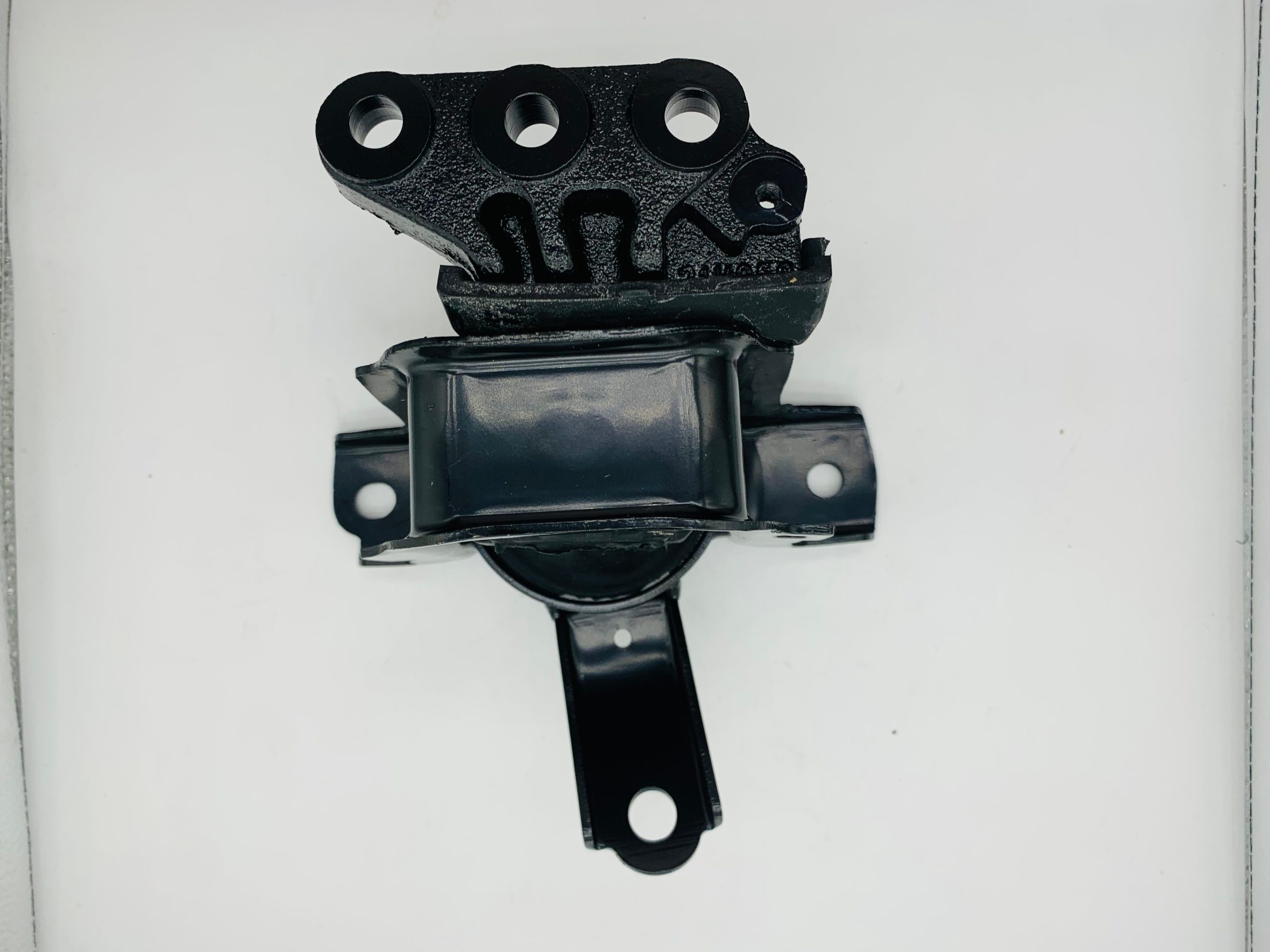
- Engine mounts: 80,000–150,000 km typical interval. Vibration and transmission clunking symptoms are pronounced, especially in Japanese vehicles with transverse engine layouts. Engine mount aftermarket: USD 2.1 billion globally in 2026.
- Control arm bushings: 100,000–160,000 km interval, but failure rates accelerate significantly in vehicles exceeding 150,000 km—the fastest-growing age cohort in global vehicle parc.
Stabilizer Links and Ball Joints: Growing Importance
As average vehicle age increases, stabilizer links and ball joints are becoming a proportionally larger share of suspension service revenue. These components have historically been considered secondary to strut and engine mounts in emerging market aftermarket channels, but as workshop sophistication increases, comprehensive suspension diagnostics are becoming standard practice.
Data from CBA Auto Parts’ distributor network in Southeast Asia shows that multi-component suspension kits (combining strut mounts, stabilizer links, and bushings in a single SKU) grew by 34% in order volume from 2024 to 2025, suggesting that workshops are increasingly performing complete suspension refreshes rather than single-component replacements.
4. Supply Chain Trends: China’s Evolving Role
China’s automotive parts manufacturing sector has undergone a structural quality upgrade since 2020. Key developments that affect the suspension parts import market:
IATF 16949 Adoption
The number of IATF 16949-certified automotive parts manufacturers in China exceeded 8,400 in 2025, up from 5,200 in 2020. This certification—which aligns with OEM production quality standards—is increasingly required by distributors in Europe, the Middle East, and Australia as a minimum supplier qualification criterion.
Material Science Improvements
Chinese rubber compound formulation for suspension bushings and mounts has advanced significantly. HNBR (Hydrogenated Nitrile Butadiene Rubber) and EPDM formulations now routinely meet the -40°C to +130°C operating range required by European OEMs, compared to SBR (Styrene-Butadiene Rubber) formulations that dominated the Chinese aftermarket as recently as 2018.
Direct-to-Distributor E-Commerce
B2B platforms and direct procurement from manufacturers are displacing multi-tier distribution in some markets. Distributors who previously sourced from regional wholesalers are increasingly establishing direct factory relationships, reducing supply chain costs by 15–25% while gaining access to technical documentation that was previously unavailable through intermediaries.
5. Strategic Recommendations for Parts Distributors (2026)
Based on the market data above, CBA Auto Parts recommends the following strategic priorities for suspension parts distributors in 2026:
- Prioritize the 2015–2020 vehicle cohort. Vehicles sold in this period are now reaching their first major suspension replacement window (80,000–120,000 km). Focus inventory on Toyota (Camry, RAV4, Hilux), Hyundai (Tucson, Elantra), and Honda (CR-V, HR-V) models from this production year range.
- Offer multi-component kits. Bundle strut mounts with upper bearings and shock absorbers, or control arm kits that include the arm, bushings, and ball joint as a single SKU. This simplifies purchasing for workshops and increases average order value.
- Invest in quality documentation. End-user sophistication is rising across Southeast Asia, the Middle East, and Latin America. Distributors who can provide material test reports, salt spray certifications, and dimensional inspection data win tier-one workshop accounts that sustain higher margins.
- Position for the EV transition carefully. Electric vehicles have 30% fewer suspension wear points (no engine mounts, different front suspension geometry on many platforms), but the ICE replacement market will remain dominant through 2032 in most emerging markets. Avoid over-rotation to EV-specific SKUs at the expense of established ICE-vehicle coverage.
Frequently Asked Questions
What is the largest suspension parts aftermarket by region in 2026?
North America remains the largest single-region market at approximately USD 4.2 billion, followed by Europe at USD 3.8 billion. However, the highest growth rates are in Southeast Asia (+18.6% YoY) and the Middle East & Africa (+16.3% YoY), making these the most attractive expansion targets for suppliers seeking incremental growth.
Which vehicle segment has the highest suspension parts demand per vehicle?
Commercial vehicles (trucks, vans) generate approximately 2.8× the suspension parts revenue per vehicle compared to passenger cars, due to higher mileage accumulation and heavier loads. Among passenger vehicle segments, Toyota vehicles consistently generate the highest aftermarket demand due to their global installed base and clear replacement interval guidance.
Are OEM-quality Chinese suspension parts accepted in European markets?
Yes, provided the supplier holds valid IATF 16949 certification and can provide product-specific test documentation (dimensional reports, material certificates, NVH test results). European independent workshops and fast-fit chains increasingly source from certified Chinese manufacturers as part of a quality-tiered product strategy. The key differentiator is documentation, not country of origin.
What suspension component has the fastest aftermarket growth rate in 2026?
Stabilizer link bushings and complete stabilizer link assemblies are growing at approximately 19% annually, the fastest growth rate among suspension sub-categories. This reflects improved diagnostic capability at workshops and increased consumer awareness of the handling benefits of properly functioning anti-roll bar systems.
How does vehicle electrification affect suspension parts demand?
EVs eliminate demand for engine mounts entirely but retain full suspension system complexity (and in some cases add complexity, as the higher weight of battery packs increases load on control arm bushings, strut mounts, and ball joints). The net effect through 2030 is modest: engine mounts represent approximately 18% of suspension parts revenue, so full EV transition would reduce market size by less than the CAGR growth projected through 2030 will add.
What is the recommended MOQ when sourcing suspension parts from China in 2026?
For most suspension components (strut mounts, engine mounts, control arm bushings), leading manufacturers accept MOQs of 50–200 pieces per SKU for initial orders, with reduced MOQs (20–50 pieces) available after establishing 6-month purchase history. CBA Auto Parts offers flexible MOQs starting at 50 pieces for new distributor accounts, with sample orders (5–10 pieces) available for quality evaluation prior to first purchase.
Conclusion
The 2026 suspension parts market presents a clearly defined opportunity for distributors who align their product mix with the aging Japanese, Korean, and European vehicle fleets in high-growth markets. Quality differentiation, multi-component kit offerings, and technical documentation capability are the critical competitive advantages in this environment.
CBA Auto Parts has manufactured OEM-equivalent suspension components since 2008, serving distributors in 30+ countries with products engineered to meet the quality standards of Japanese, Korean, and European OEM specifications. Our product range covers engine mounts, strut mounts, control arm bushings, center bearings, and stabilizer links.
Contact our export team for a complete product catalog, distributor pricing, and sample ordering information.
Data sources: MarketsandMarkets Automotive Suspension Market Report 2026; Grand View Research Automotive Aftermarket Analysis 2025; IHS Markit Global Vehicle Parc Data Q4 2025; S&P Global Mobility Average Vehicle Age Report 2025; CBA Auto Parts distributor network data 2025–2026.